Aimez-vous une réserve de marche?

Let’s explore something…

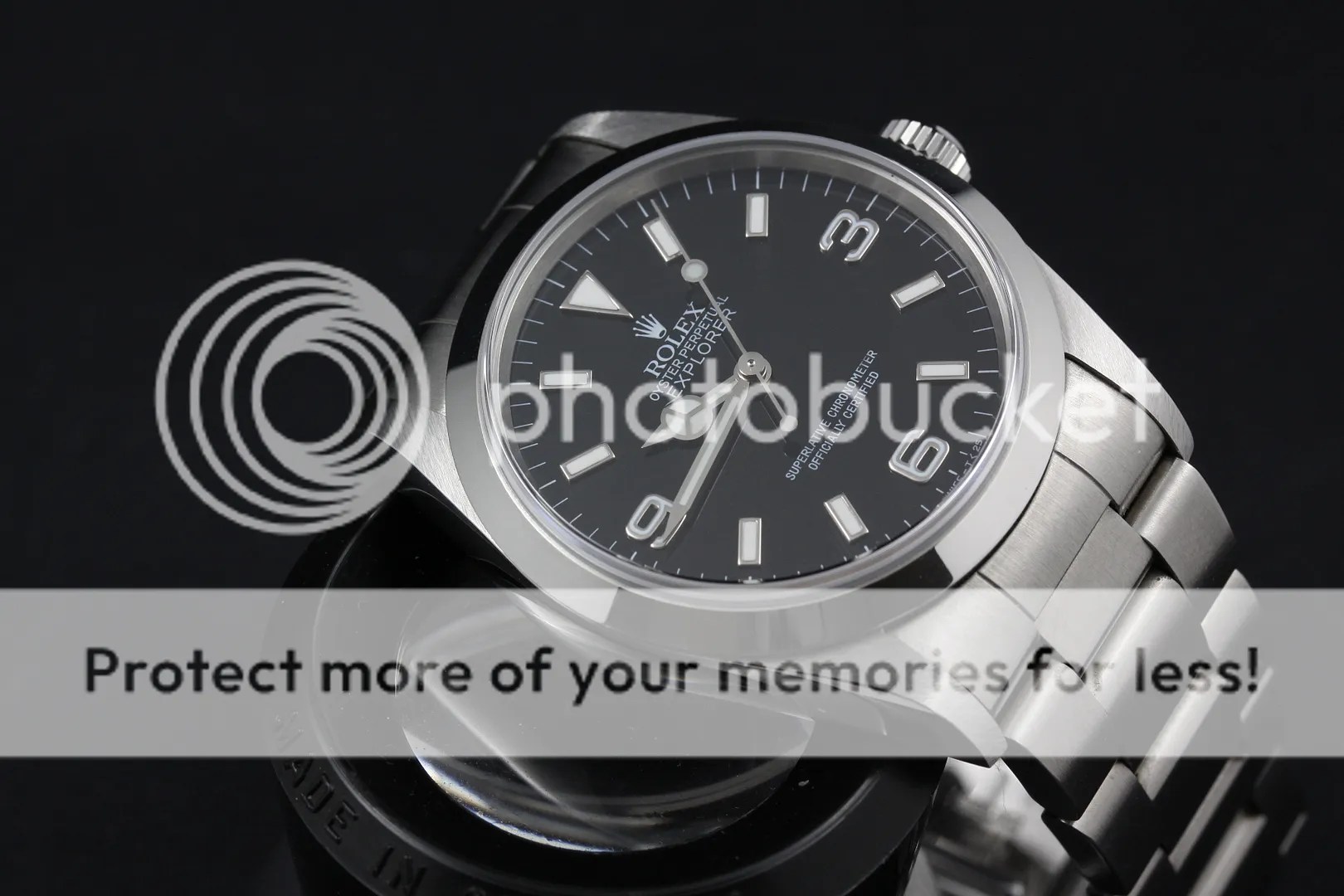
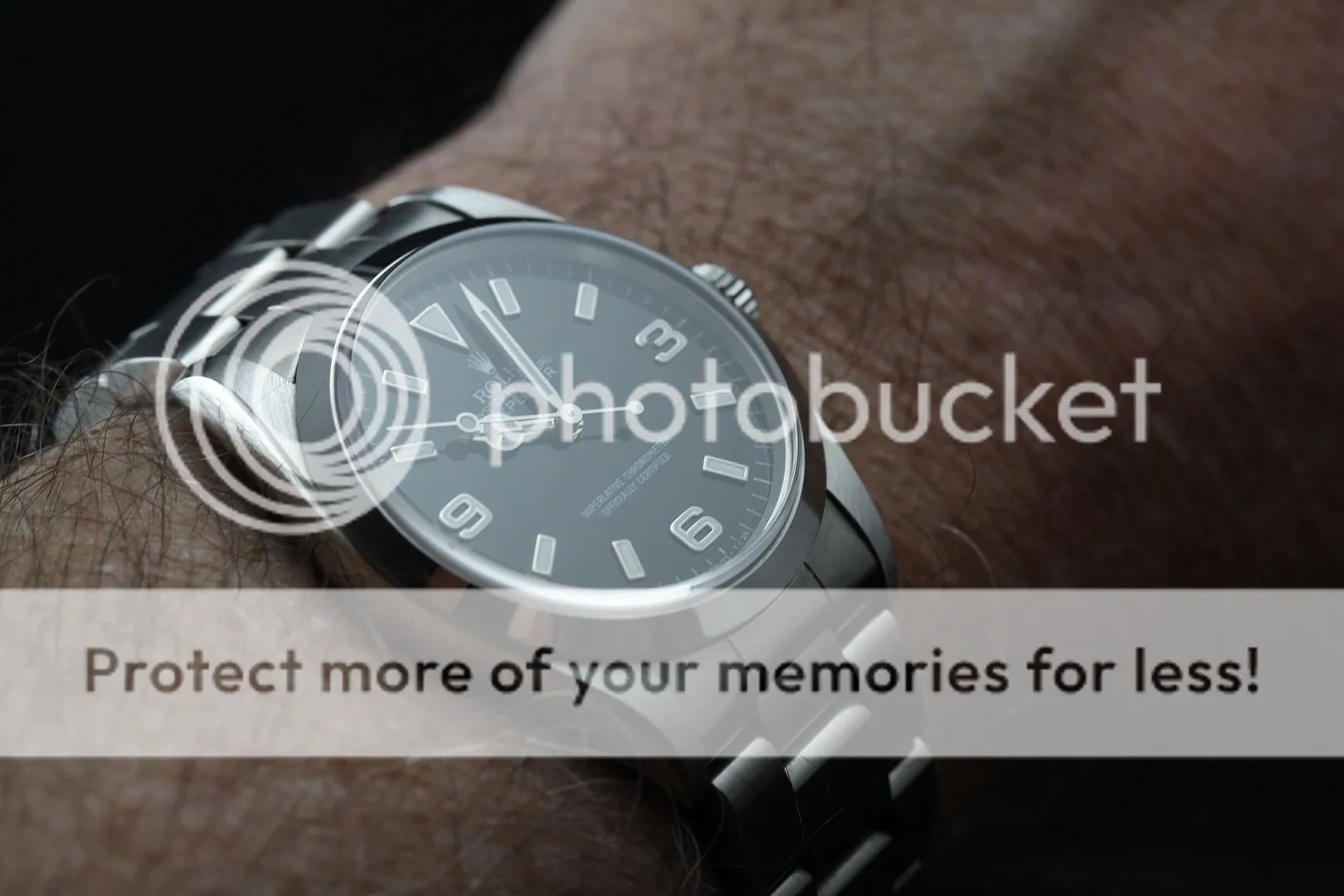
I love the Explorer range. Both the I and II really appeal to me, and whilst I bagged a lovely tritium 14270 recently I’d pretty much forgotten about it’s cousin, the 16570 “Polar”. However, a recent opportunity turned up just what I’d been waiting for, and it (a 1993 16570, that is) duly arrived not long ago looking even nicer in the metal than I’d hoped. Complete with box and booklets, the original black dial and a very recent service warranty from Mr Bill Rice to complete the set.

I can honestly say that I’ve never liked a watch so much upon putting it on my wrist. What do you reckon?

Form meeting function

Yesterday, it seemed as if the cogs and wheels of the horological universe had turned to point fate in my direction, and so off I toddled to what was meant to be a quick pint with a fellow forum member but which turned into a very enjoyable couple of hours in the windswept wilds of Elstree. A trade was completed, and a belated dinner devoured.

So, here’s what I ended up with, then. Possibly the most underrated Rolex ever, and probably the best example of a watch where form and function meet to perfection. In fact, the size of the case, the width of the bracelet and the shape of the lugs deliver what is, I think, the most wearable Rolex that the company has ever produced. It looks the way a watch was always meant to look, and manages to be both discreet and sporty in one fell swoop. This one – almost as a bonus – is akin to NOS it’s in such good condition, despite the fact that it dates back to 1997. This means, of course, that it’s a tritium dial and I think the difference between this and the luminova variant is astonishing; the subtlety of the indices and hands gives it a warmth that a modern watch will always struggle to achieve. Add a complete set of box, papers and assorted bits that it came with, and the pain of parting with the Ingy is far, far easier to bear.

Some photos of my 14270, then.

1675 on jubilee?

Well I like it!

1965 vintage

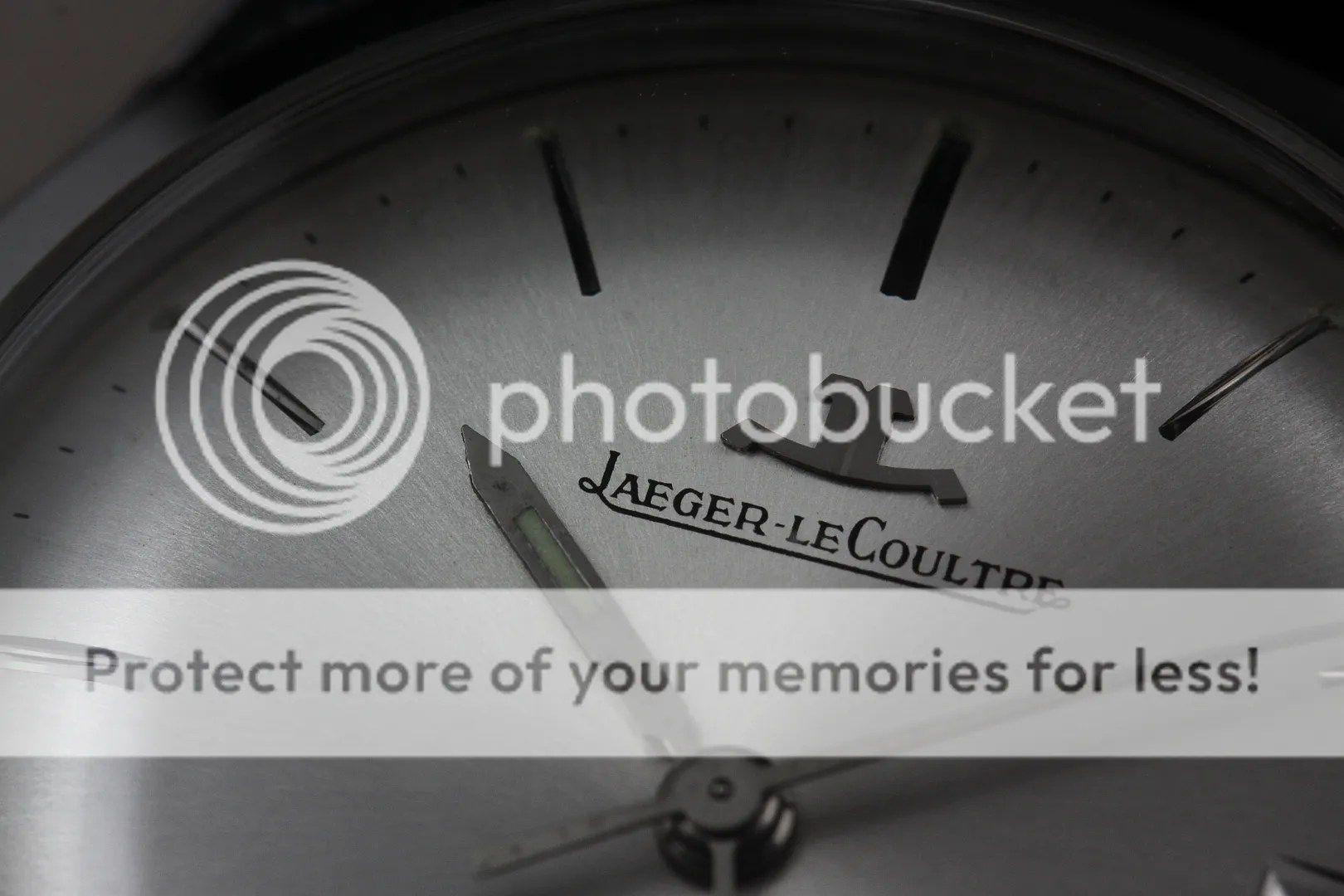
This is a pick-up I’m very pleased with – a JLC from 1965, model reference E393. Its 35mm without the crown, has a glorious starburst dial, and a fantastic domed plexi to set it all off. It’s quadruple signed (dial, crown, case back and movement) and for me epitomises everything that I like about smaller, simple watches. The movement is a JLC calibre K881, and this is quite interesting in itself.

The K881 was introduced in 1959 and was the first JLC movements to feature a centrally pivoted 360 degree rotor that wound in both directions. The K part of the calibre number was a reference to Kif Flektor, the form of shock protection mechanism used in this unit. The company had flirted with rotor design in 1951 with the superb calibre 493, this winding in only one direction, but JLC watches with this movement were only sold for a two year period and it wasn’t to be until 1959, when the E393 was released, that their automatics finally entered the modern age. Incidentally, a development of this calibre, the 888, is still manufactured by Jaeger LeCoultre today which is an indication of how significant, and how brilliantly engineered, these K881 movements were.

One of the most obvious characteristics of the K881 is that, almost uniquely on a movement of this grade, it has no mechanism for fine adjustment. Astonishingly, the reason for this “omission” was that the K881 was manufactured as standard to such fine tolerances that it would achieve chronometer rated accuracy as a production norm, without the need for any further adjustment. The American publication “WatchTime” ran a test on the K881 and the various other related Jaeger LeCoultre movements from the same era in its August 2003 edition, concluding that this mechanism “embodies superlative expertise that emphasises skilful, precise craftsmanship and surface beauty”. Further mention is made that in its very slightly revised form, this same movement type was officially certified as a chronometer and sold in tiny quantities as the “Chronometre Geomatic”, a model that commands a lofty price today on account of its scarcity.

So, beautiful both on the outside and within…

Fanboy?

I seem to be loving JLC at the moment, and picked another one up today that’s meant to scratch my Master Calendar Moon itch for a while. It’s a Master Geographic from the early naughties, but the rare “Master Black” version. In other words, it has a black dial, and not very many of these were made.

I like the second time zone complication in particular, and will use this when traveling, I think. It came with the bracelet (a kind of beads of rice affair, with the links attached through an unusual spring bar arrangement) but it’ll be worn on leather. It may also be treated to a very light polish, depending on how severely my OCD kicks in.

Ingenious

I’ve had an IWC before – a vintage Yacht Club, actually, but nothing like this beauty. I’ve fancied one of these for a long time, and having waited a while due to the logistics of delivery it certainly doesn’t disappoint. Aside from the beautiful in-house movement (I’ll post som photos of that soon) it’s built like a tank. The dial’s something to behold too, with a textured white finish setting off rose gold indices and hands that look wonderful when the light hits them.

It was this or an AP 15300 – bearing in mind that I didn’t really have funds for the latter, I can’t say that I’m even slightly regretting my decision.

Another little classic

I actually bought this with the intention of giving it to Bea as a wedding present. She thinks, apparently, that a black dial is too “masculine”; in a way she’s right, because I reckon it’s great and I’ll now be wearing it myself.

It’s 40 years old (not that you’d know it) and at 34mm fits in quite nicely with my smaller watch preference. Thanks Bea!

It’s all in the grain…

De Luca + shell cordovan =

I’ve been mulling over the strap options for this lovely watch, and have decided on a custom shell cordovan; whilst it’s not as tapered as the original I think it’s a perfect match so it’ll be staying on for the foreseeable future.

Me likey very much 🙂

Let’s hear it for the YAB

Or, to be more precise, Time factor’s “Yet Another Bond” NATO. Probably the best NATO ever.

Or maybe I should have said…

Blue is the new black? Whichever, this really is one of the most photogenic watches I’ve had – the dial is a dream, as you can see from the photos.

The size, at 34mm, is taking a little getting used to, but with a 35mm vintage JLC on the way too I’m definitely done wth wearing clocks on my wrist!

Small is the new big

Having spent some time wearing a rather lovely PAM that was a chunky 44mm without the crown guard, I’ve come to realise that a 6.75″ wrist doesn’t need a large watch. In fact, I can wear anything from 34mm to 40mm and feel completely comfortable, to the extent that my Speedy (at 42mm) feels relatively large.

This lovely little thing arrived this morning just as I was going to go out for a run. It’s an A serial from 1998, which would make it the first year that Luminova was used on the dial (the replacement for tritium was invented in 1993 and patented in 1995; Nemoto & Co was contracted to provide “LumiNova” to the Swiss Watch Industry in 1998 and it was widely used thereafter).

It came with the complete set of everything, and was fully serviced and pressure tested last year so is good to go. I like it a lot, and the blue dial looks pretty (and pretty cool), changing slightly as the light hits it in different ways. It’s a good precursor to a (very old) vintage JLC that I’m hoping to add soon.

More… Reserve de Marche

I really do like this watch, and it’s so nice to have something a little different. I’m getting more and more drawn towards complications, and at some point soon would like to add a moonphase of some description.

Bearing in mind that the Patek Phillipe Annual Calendar (in white gold with slate dial) is the best part of £20k, that may have to wait for a while 😉

A change of direction

Today, something that I’ve been lusting after for a long time now arrived in the post. I first tried on a JLC when I met up with a TZUK friend for a coffee a few months back. I was overwhelmed by the quality and the precision of the engineering, but was drawn to the slightly more dressy watches in their range; the Reserve de Marche always appealed, and having the opportunity to try one on not long ago sealed the decision for me.

The movement is JLC’s in-house Calibre 928; 256 parts, 45 jewels, 22ct gold rotor edge, 1000 hours tested, adjusted in 6 positions and beating at 28,800VPH. The dial – a thing of beauty – features subsidiary dials for constant seconds, date, and power reserve. The date is changed via a pusher above the crown that sits slightly proud of the case, and the power reserve of 40+ hours moves with every wind of the crown. It’s not big (37mm without the crown, with 19mm lugs) but it’s far from small. It really is an exquisite watch.

I’m off to stare at my wrist for a while.

More seriously then…

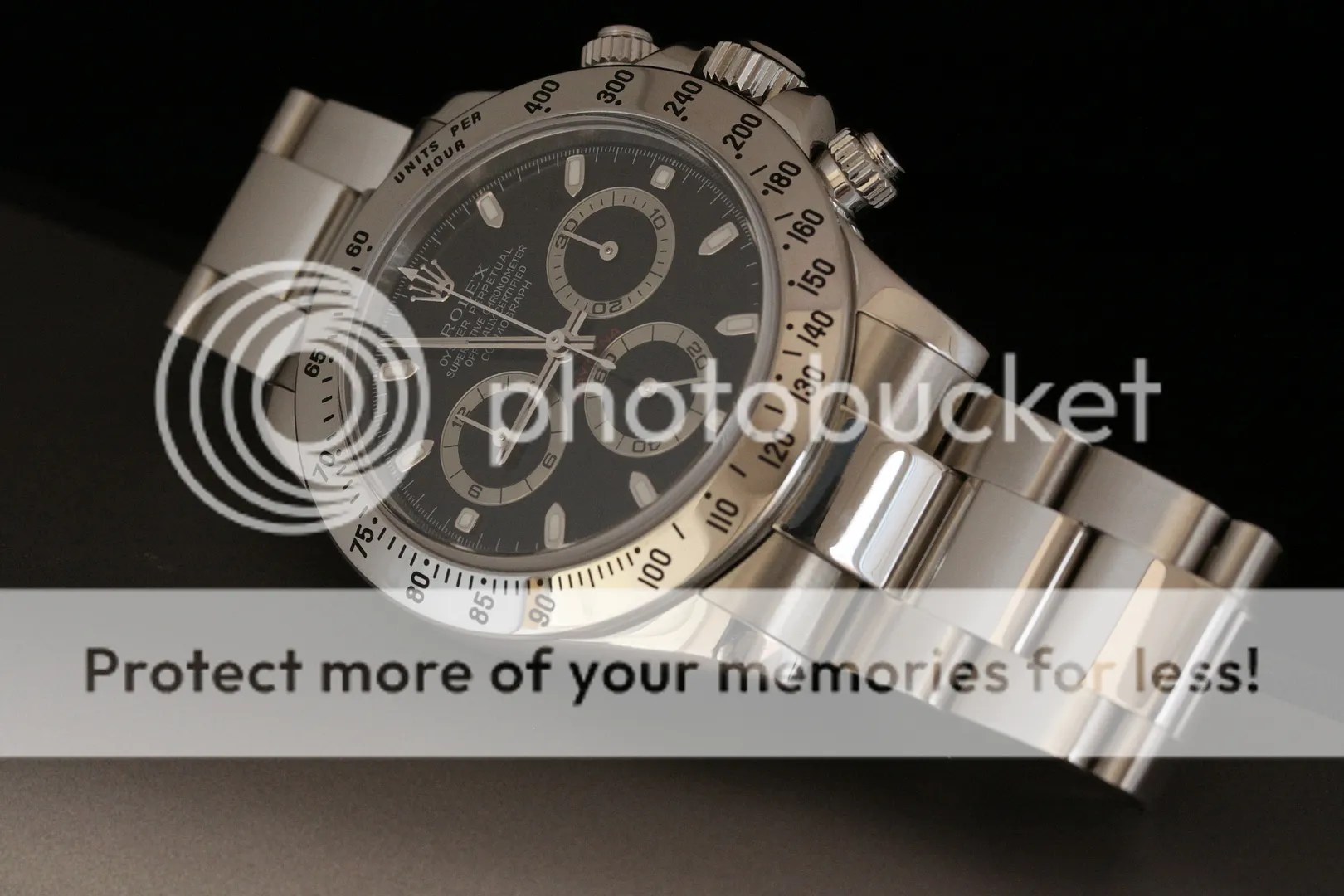
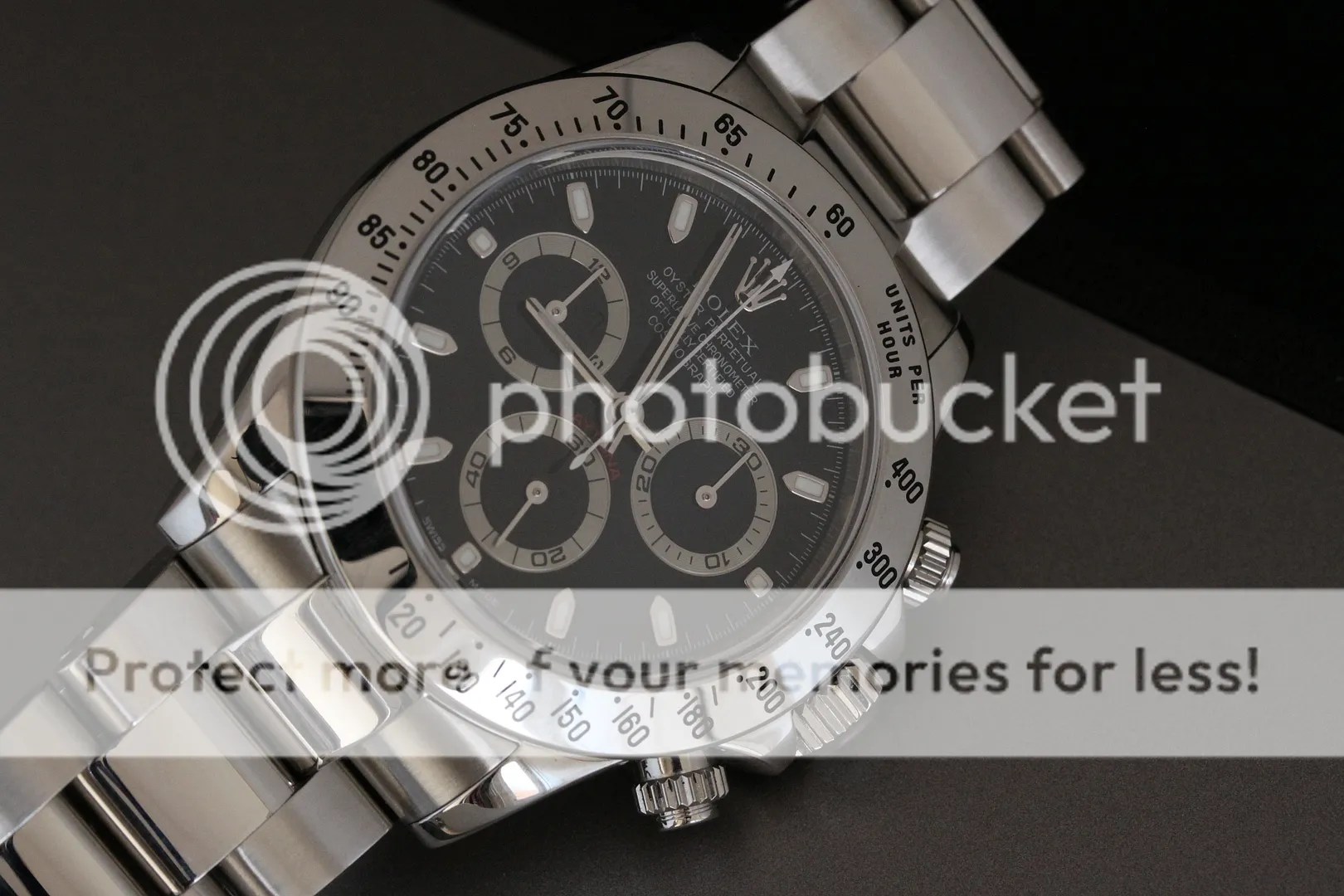
The original “Zenith” Daytona housed Zenith’s Cal. 4030 movement. Rolex heavily modified what was in fact the El primero engine, and beside other modifications altered the beats per hour count from 36,000 to 28,800 (from 5 to 4 Hertz). In fact, only some 50% of the parts of the original Zenith movement were untouched after the modification.

Notwithstanding the success of the 4030, Rolex had been working on the new in-house movement for some time before it’s launch at the Basle World Fair in 2000. On October 31st 1995, a patent with drawings of parts of the movement construction was applied for (Swiss patent number CH199 5000003077), and on October 29th 1996 Rolex applied for further patents of the movement (US patent number 5.793.708). This was, of course, what transpired to be the in-house cal. 4130 – the movement rated as one of the top ten ever made.

Aside from this, of course, the Daytona is – quite simply – a beautiful watch.

It seems…

You either like it or you don’t!

On straps, and Zeniths

One of the more surprising things (to me, anyway) that I’ve found over the last year or so has been the way that I’ve found myself gravitating away from bracelets and towards straps. Although there’s no doubt that a well-engineered bracelet can be a joy to wear, I think that leather gives a watch far, far more character. In fact, even though some of my experiments have met with a mixed reception I’ve always liked the result (and my 5513 will probably never be paired with it’s bracelet again).

The De Luca that arrived a few days ago is slightly different, in that it (the series 1, at least) was only ever sold on a strap; Coady managed to source a correct De Luca bracelet, but technically it was only ever really correct for the later models. I was finding the look a bit clinical but luckily I had an OEM strap and buckle in the package so I thought I’d give it a try. I absolutely love it, and much prefer it to the previous look. In fact, I’ve bought a couple of Di-Modell Jumbos – one in brown and the other in tan – to see how they look mounted on the watch.

I’ve just taken a few shots, so I’ll shut up now and let them do the talking…

Più foto di De Luca

It really is bellisimo 🙂

Qintessential

Well, it is, isn’t it?